
 EN
EN
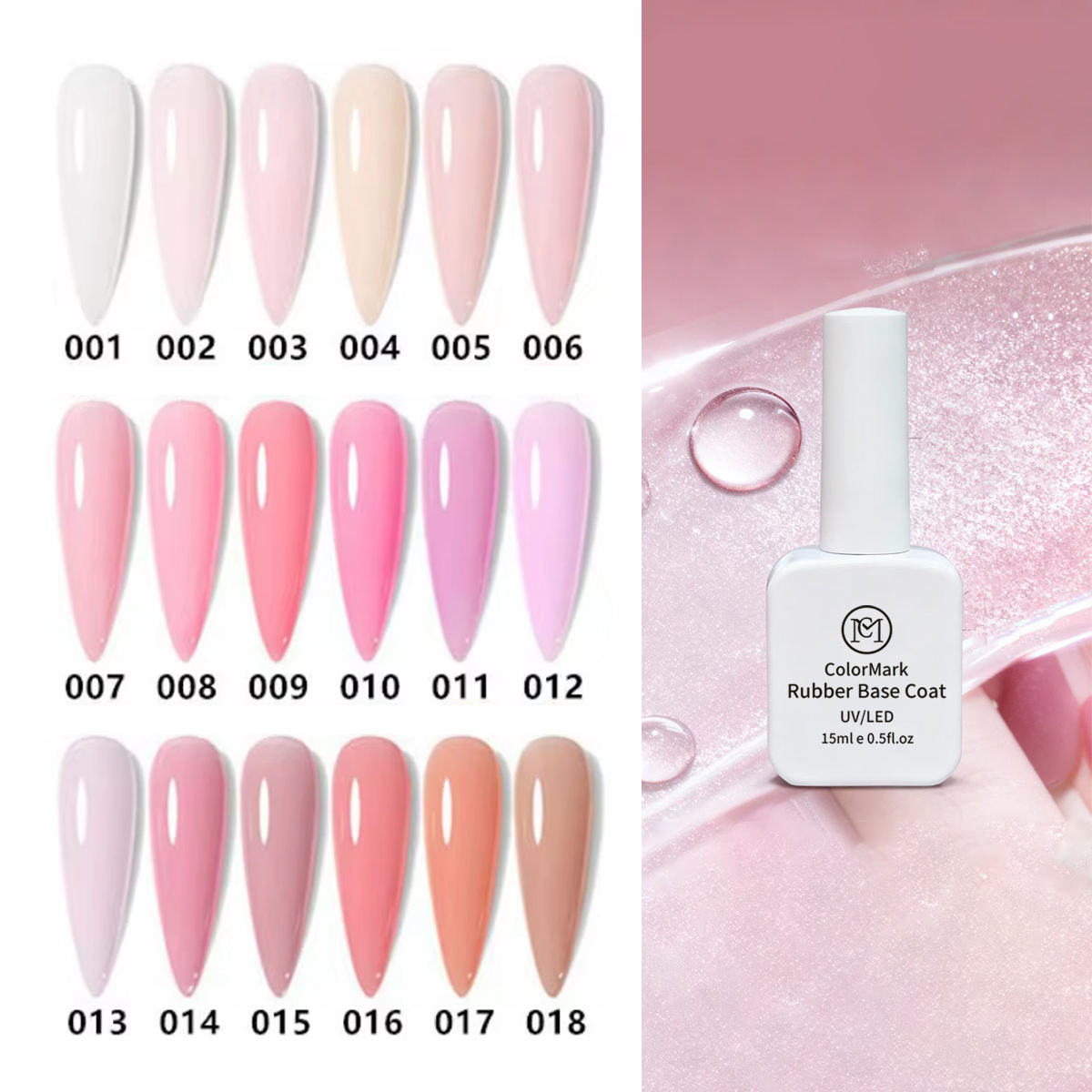
Base coats and rubber gels differ in the way they are made and the materials they use
Unlike regular base coats that have rigid base coat materials, rubber base gels use flexible base coat materials that allow the rubber base gels to have a better range of flexibility at a molecular level after the rubber gels have cured. Rubber base gels are formulated with a core modified high elasticity base coat resin and then rubber base gels use both mild adhesion promoters and flexible cross-linking agents. These material differences are the reason rubber gels have flexible structures after the curing process, and they have a more stretchable and relaxing attachment instead of just a rigid and stiff attachment.
Usage Performance Differences You Can Feel
When it comes to nail art, the difference between rubber base gel and regular base coats can't be missed and is evident from many salon use cases. Regular base coats typically allow the nail art to last only between 10 to 15 days and lead to edge lifting and chipping when the nails flex or bend. With the rubber base gel, nail art maintenance time extends beyond 30 days and it helps to reduce lifting when nails bend naturally. Additionally, regular base coats can be damaging to thin and weak natural nails, because they can be overly rigid and fit poorly while the rubber base gel is soft and helps to provide a protective layer and reduces the irritation from gels to the nail bed which many professional nail technicians appreciate.
Quality and Compliance Standardization
Regarding customer recognition, the quality and safety of the products are the most important factors. In this respect, rubber base gel products have higher compliance requirements concerning the production process and the selection of the raw materials. Compliance with the most stringent global regulations governing the production of rubber base gels is essential. All rubber base gels are compliant with the US FDA and EU REACH regulations, which stipulate that the raw materials used in production must not contain hazardous substances, including plasticizer and heavy metal impurities that exceed specified limits. Furthermore, the volatile constituents of the gels must be below specified Safe levels. In contrast, base coats that you can find in the market, have varying levels of quality. Some rubber base gels are considered substandard because they are not compliant with some regulations, and this can lead to adverse health effects and skin sensitization. It is therefore essential to have a quality gel polish manufacturer that has clear, stringent quality management systems to ensure that raw materials used in the production of rubber base gels and the finished products are tested to and compliant with the requirements of the International quality control standards. This also covers the safety and marketability of the products in the global marketplace.
Operational benefits with adaptable scenarios
Nail art nexperience has shown that rubber base gel can be more adaptable than any other gel in many scenarios which presents a significant operational advantage. For instance, a simple one-colour nail art design can be done using a standard base coat. The opposite is true for more complex nail art designs, especially those that utilise cat eye gel polish, nail extensions, and decorative rhinestones. Rubber base gels provide a stronger, more adhesive, and elastic base layer for cat eye gels and other complex nail art decorations. With the elastic layer of rubber base gel, the art decorations can withstand and muffle any external forces which might cause them to separate and fall off. Furthermore, a good rubber base gel has a viscosity that allows controlled and non-flowable operation to the nail cuticle which, in turn, decreases the amount of time a nail artist needs to spend on each nail. A novice nail artist can easily adjust the viscosity to achieve the desired level of rubber base gel and increase the success rate of the nail art.
Commercial Value in Salon Operations
Rubber base gel provides a clear commercial value for both nail salons as well as nail product distributors. For nail salons, the long-lasting effects of rubber base gel prevents nail art damage. This saves labor and material costs, and increases customer satisfaction. Many salon owners say that customer retention after using rubber base gel increased by 30%. For nail product distributors, rubber base gel is a value added product, and improves performance and safety standards. This product increases the value of the product line and improves competitiveness in the marketplace. Small to medium distributors can now customize rubber base gel to suit their own markets and improve. This also allows for the diversification of product profits.
The first step to nail art perfection is the proper first coat. Rubber base gel stands out from the typical first coats because of its exclusive formula and compliance, performance, and commercial value. Professional nail techs will appreciate the quality results while salon owners will find it improves their efficiency. Regular consumers will appreciate how the International certified rubber base gel protects their natural nails and also allows for longer lasting nail art.