
 EN
EN
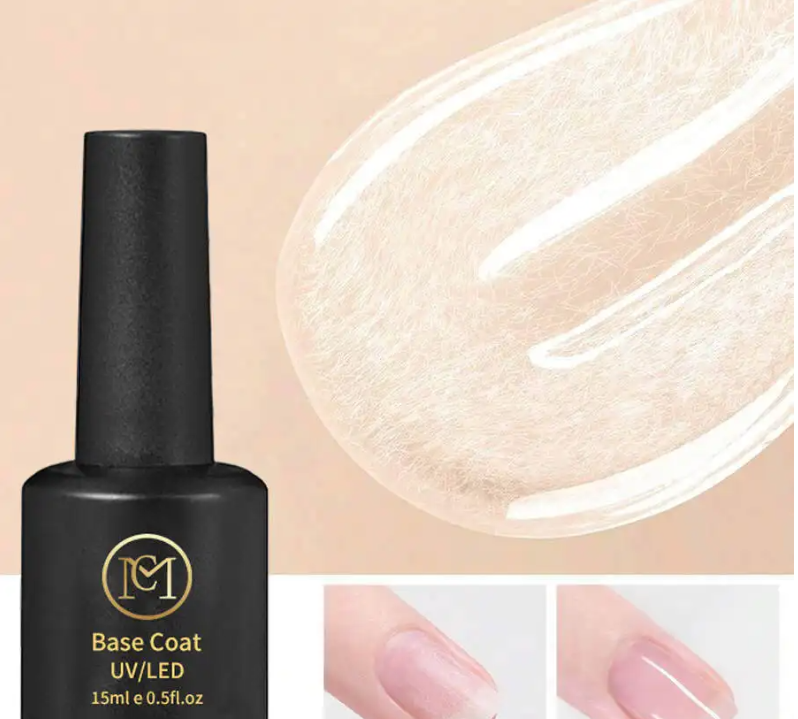
What Separates a Rubber Base from Traditional Gel Bases
A nail technician sees the truth of a natural nail plate the moment the client extends their hand. Ridges running vertically, peeling layers at the free edge, or a thin, flexible nail that has never managed to hold a gel manicure for more than a week. Traditional hard gel bases and standard soak-off base coats were designed for a single purpose: to stick to keratin and provide a bonding layer. Their chemistry prioritizes adhesion above all else, and the cured film tends to be rigid, almost glassy in its hardness. A rubber base gel occupies a fundamentally different category. The term rubber is not marketing language. It describes a family of urethane-modified oligomers that, when cured under a UV or LED lamp, form a polymer network with a measurable degree of elongation and elastic recovery. In practical terms, this means the cured base can flex, twist, and return to its original shape without cracking. This flexibility is the defining characteristic that makes the product suitable for natural nails that are themselves flexible, prone to bending, or subjected to the daily micro-impacts that accumulate into full-blown product lifting. The mechanical property that matters most here is not hardness on a Shore scale. It is the ability of the material to deform with the nail plate and recover without delaminating from the keratin surface.
The Functional Benefits of Flexibility and Stress Absorption
The biomechanics of a natural nail plate explain why rigidity in a base coat is often the root cause of premature failure. A natural nail is not a static platform. It expands and contracts with changes in humidity and body temperature. It flexes when the fingertip presses against a keyboard, a zipper, or a steering wheel. If the base layer bonded to that nail is rigid and brittle, every flex cycle creates shear stress at the interface where the product meets the keratin. Over the course of several days, thousands of these tiny stress cycles accumulate, and the bond line begins to fracture at the perimeter. This is the microscopic starting point of the lifting that clients notice at the cuticle or the free edge. A rubber base gel, by virtue of its engineered elasticity, moves with the nail rather than fighting against it. The stress that would normally concentrate at the bond line gets distributed throughout the volume of the flexible base layer. This is the same engineering principle that allows a suspension bridge to survive wind gusts without snapping its cables. The product absorbs and dissipates mechanical energy instead of transmitting it to the adhesion interface. For a client with naturally thin or hyper-flexible nails, this stress-absorbing property is the difference between a manicure that fails in five days and one that stays intact through the full appointment cycle.
Adhesion, Self-Leveling, and the Perfecting Effect
While flexibility defines the structural advantage of a rubber base, it must still fulfill the foundational duty of gripping the nail plate and creating a smooth canvas. The adhesion chemistry in a quality rubber base is formulated to bond both to the natural keratin and to the subsequent gel layers that will be built on top of it. This dual affinity is critical because a base that sticks to the nail but repels the color gel creates a buried delamination risk that only becomes visible when the top layer chips off in sheets. Beyond adhesion, the self-leveling behavior of the product directly impacts the speed and ease of application in a busy salon setting. A well-formulated rubber base should flow just enough to fill in ridges and smooth out surface irregularities without flooding the cuticles or sidewalls. This leveling window, the time between when the product is placed and when it must be cured, gives the technician control over the final surface contour. Many formulations also incorporate a slight tint, often a translucent pink, beige, or milky white, that performs a perfecting function. This tint masks the yellowing or discoloration that some clients develop from medications, nutritional factors, or simply the aging process of keratin. The rubber base therefore serves three roles simultaneously: an adhesive anchor, a stress-absorbing cushion, and a cosmetic corrector that enhances the final color payoff of the gel polish.
Application Protocols That Determine Longevity
Even the most carefully engineered rubber base gel will underperform if the application technique does not respect the chemistry of the product. The first and most common error is applying the base too thickly. A thick layer of rubber base can feel soft or rubbery after curing, and it may trap uncured material underneath if the UV or LED lamp output cannot fully penetrate the mass. The recommended approach is to apply a thin, scrubbed-in layer first, working the product into the microscopic texture of the etched nail plate to ensure intimate contact, and then to build structure with a second, slightly thicker application if the natural nail requires reinforcement. The cuticle zone demands particular attention. Any base product that touches living skin or floods the proximal nail fold will lift within days, creating a flap that catches on hair and fabric and invites the client to pick. A practiced technician leaves a clean, hairline margin around the entire perimeter of the nail. Curing discipline is equally important. A lamp with insufficient output, aging bulbs that have drifted outside the wavelength spectrum required by the photoinitiator, or a cure time that is too short for the thickness applied will produce a base that seems hard on the surface but remains under-cured at the center. This under-cured layer becomes a chemical weak point that softens over time as plasticizers from the top layers migrate downward. Proper prep, precision at the edges, controlled thickness, and complete curing under a verified lamp form the four pillars of application that allow a rubber base to deliver its promised performance.
Rubber Base as a Business Asset in the Salon
Moving from technical performance to business economics, a trusted rubber base gel functions as a quiet profit protector in the professional salon environment. Redo appointments are one of the most significant hidden costs in a nail business. A client who returns after four days with a lifted edge or a chipped corner consumes a chair time slot that was intended for a paying service, and the redo itself generates no revenue. A base product that consistently holds the full manicure together through the standard two to three week wear cycle directly reduces the frequency of these uncompensated visits. The service speed also improves with a product that self-levels effectively and cures reliably. When a technician trusts their base to perform, they can move through the application steps without hesitation, building a rhythm that increases the number of clients served per day without sacrificing quality. Client confidence grows in parallel. A client who experiences a rubber base manicure that survives a vacation, a week of gardening, or a busy shift in a healthcare setting where hands are constantly washed and gloved becomes a loyal advocate for the salon that introduced them to the product. They return not because they need a repair, but because they want a refresh. This shift from corrective visits to elective appointments is the financial signature of a product that delivers on its technical promises. The cost of the base product per service is a fraction of the revenue generated, making its reliability a direct contributor to the salon's bottom line.
The Supply Chain Behind a Trusted Product
The consistency of a rubber base gel from batch to batch and from one salon order to the next is not a matter of chance. It is the direct result of a disciplined manufacturing and supply chain operation. Variations in raw material quality, particularly in the urethane oligomers and photoinitiators that define the cured film properties, will produce a product that performs differently despite having the same label. A salon that builds its service reputation on a specific rubber base cannot afford to receive a batch that has shifted slightly in viscosity, cure speed, or final flexibility. This is where the value of a supplier with integrated quality control becomes apparent. The ability to trace each production batch back to its raw material lots, to verify cure performance under standardized lamp outputs, and to maintain viscosity within a narrow tolerance range are indicators of a manufacturing culture that understands the professional user's dependence on predictability. Colormark operates with this understanding of the professional nail industry, supplying rubber base gels that are produced under controlled conditions with consistent formulation integrity. For salons and distributors seeking a reliable foundation product, the choice of a supplier with this level of manufacturing discipline ensures that the technical benefits of flexibility, adhesion, and self-leveling are delivered not just in a sample jar, but in every unit that reaches the technician's station. This supply chain reliability transforms a product from a trial purchase into a trusted standard within a professional nail service business.
Table of Contents
- What Separates a Rubber Base from Traditional Gel Bases
- The Functional Benefits of Flexibility and Stress Absorption
- Adhesion, Self-Leveling, and the Perfecting Effect
- Application Protocols That Determine Longevity
- Rubber Base as a Business Asset in the Salon
- The Supply Chain Behind a Trusted Product


