
 EN
EN
Recognizing the Brand Opportunity in the Treatment Room
A salon professional stands in a unique position that beauty product marketers spend fortunes trying to replicate. Every day, across the manicure table, a dialogue happens. A client admires a color, asks about its durability, and trusts the recommendation because it comes from the person who has cared for their nails through seasons of wear and tear. This exchange is not a simple transaction. It is an accumulated deposit of credibility that sits in an emotional bank account. When that same professional begins to offer products for retail purchase, the recommendation carries a weight that no social media advertisement can match. The client buys not just a gel polish, but the confidence that someone with deep practical experience has selected or created this product for them. For the salon owner or independent beauty entrepreneur, this represents a logical and powerful extension of their business. Moving from using products to owning a brand transforms a service-based revenue stream into a product-based asset. The challenge has historically been access. Many professionals assume that creating a custom gel polish line requires a chemistry degree, a factory, and a six-figure investment. The reality has shifted considerably. With the right manufacturing partner, the barrier to entry is no longer a technical impossibility but a matter of finding a supplier willing to collaborate on formulation, packaging, and support.
The Formulation Foundation and What Makes a Kit Premium
The difference between a forgettable white-label polish and a premium private-label product sits squarely in the formulation chemistry and the discipline of its production. A gel polish is not simply pigment mixed into a sticky resin. The resin system itself determines how the product cures under a lamp, how it flexes with the natural nail, and whether it soaks off cleanly or requires aggressive filing. A high-quality base uses a balanced blend of oligomers and monomers that form a cross-linked polymer network under UV or LED exposure, engineered to provide adhesion without causing nail plate damage during removal. The pigment dispersion is equally critical. A color that looks rich in the bottle but applies streaky on the first coat indicates poor pigment wetting or inadequate milling during production. True color mastery involves grinding pigment particles to a consistent, sub-micron size and dispersing them uniformly so that each brush stroke deposits an even layer of color. A brand owner evaluating a potential kit should look beyond the color swatch and ask about the underlying system: the viscosity profile, the self-leveling window, the cure time requirements, and the soak-off behavior. These technical attributes define the end-user experience far more than the color name on the label. A manufacturer that can discuss these formulation specifics transparently is demonstrating the depth of expertise that separates a true development partner from a simple filling operation.
Customization Beyond the Bottle Cap and Label
True customization extends far beyond choosing a shade from an existing color deck and sticking a private label on the bottle. It is a multi-layered process that defines the product's identity from the inside out. The first and most impactful layer is the product formulation itself. A brand owner with a specific clientele may need a gel polish that cures slightly faster because their salon runs on fifteen-minute service intervals. Another may require a thicker viscosity because their signature nail art technique involves 3D sculpting. A responsive manufacturing partner can adjust these rheological properties without destabilizing the core chemistry. The second layer is the bottle and brush system. The shape of the bottle communicates brand personality before the customer ever opens it. A heavy, faceted glass bottle signals luxury. A sleek, matte-finished cylinder suggests minimalist modernity. The brush inside that bottle is arguably even more important than the glass. A brush that is too stiff creates ridges and streaks. A brush that is too floppy floods the cuticles. The ideal brush has the right combination of filament density, length, and cut shape to match the viscosity of the gel it delivers. The third layer involves the supplementary items that complete the kit: the coordinating base and top coats, the matching nail prep solutions, and the educational materials that teach the end user how to achieve the best results. A brand owner who curates this entire system thoughtfully creates a product experience that feels cohesive and professional, not cobbled together from disparate suppliers.
Navigating Compliance, Safety, and the Regulatory Paperwork
A beautiful color and a sleek bottle mean nothing if the product cannot legally enter the target market. The regulatory landscape for gel nail products has tightened considerably in recent years as consumer awareness of ingredient safety has grown and as regulatory bodies have increased their scrutiny of UV-cured cosmetic products. A responsible brand owner must understand the basics of compliance before placing a single order. This includes verifying that the formulation is free from prohibited or restricted substances in the destination market, that each ingredient is correctly listed according to the International Nomenclature of Cosmetic Ingredients, and that the product has undergone a toxicological safety assessment by a qualified professional. The European Union, the United Kingdom, and various states within the US each maintain distinct regulatory frameworks, and a product compliant in one jurisdiction is not automatically compliant in another. Beyond the legal requirements, there is an ethical dimension to safety. A properly formulated gel polish should avoid the known sensitizers that cause allergic contact dermatitis, a growing concern in the nail industry. A manufacturing partner that maintains a robust safety dossier, including Safety Data Sheets for raw materials and finished product Certificates of Analysis, provides the documentation that protects both the brand owner and the end consumer. This transparency is not a bureaucratic burden. It is a competitive advantage that allows a brand to market itself as a trusted, professional-grade choice in a market increasingly skeptical of unregulated beauty products.
Building a Recognizable Product Family Through Curation
A single great color does not make a brand. A brand is a point of view, expressed through a curated collection that tells a story and gives the customer a reason to purchase multiple items. The art of building a gel polish kit involves thinking like a designer rather than a warehouse manager. The color palette must have internal logic. A collection that ranges from a cool-toned nude to a deep winter burgundy, with a few high-impact accent shades in between, gives the end user the tools to create complete looks. The finish variety adds depth to the offering. A kit that includes creams, shimmers, and perhaps a translucent jelly or two allows the customer to layer and experiment, increasing product usage and reorder rates. The naming strategy is often underestimated as a brand-building tool. Names that are difficult to pronounce, confusing to remember, or disconnected from the visual color create friction in the customer journey. Names that evoke a mood, a place, or a sensation strengthen the emotional connection to the product. This curatorial process is where the brand owner's intimate understanding of their customer base becomes a strategic advantage over mass-market competitors. A generic brand must appeal to everyone and therefore speaks to no one in particular. A well-curated private label collection speaks directly to a specific community, whether that is bridal specialists, editorial nail artists, or clients who prefer an understated, office-appropriate palette. This specificity is the engine of brand loyalty.
The Manufacturing Partnership That Scales with Your Brand
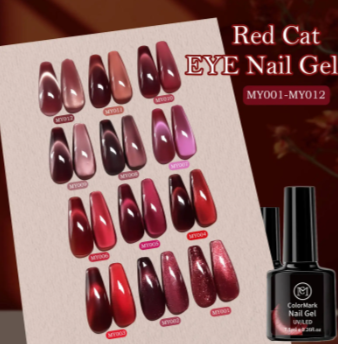
Behind every successful private label gel polish line sits a manufacturing partner whose capabilities and reliability define the brand's ability to grow. The relationship between brand owner and manufacturer is not a simple vendor transaction. It is a strategic alliance where the manufacturer's formulation expertise, production consistency, and supply chain management directly impact the brand's reputation in the marketplace. A brand launch typically begins with modest volumes, a few hundred units per shade, as the founder tests the market and refines the offering. A manufacturer that treats these initial orders as an inconvenience rather than an opportunity signals a partnership that will not survive the growth phase. The ideal manufacturing partner scales gracefully. They maintain formulation fidelity as batch sizes grow from pilot quantities to production volumes. They manage raw material procurement so that pigment lots are consistent and the color that a customer reorders six months later matches the color they purchased initially. They offer evolving support as the brand matures, from basic filling and labeling to advanced services such as custom packaging design, display unit fabrication, and regulatory documentation for new market entry. Colormark operates with this partnership philosophy, providing customizable gel polish kits that support brand owners from the initial concept stage through to full commercial scale. When a beauty entrepreneur selects a manufacturing partner with this level of integrated capability, the result is not merely a product that looks good on a shelf. It is a brand foundation built on technical consistency, regulatory integrity, and a supply chain that can deliver on the promises the brand makes to its customers.
Table of Contents
- Recognizing the Brand Opportunity in the Treatment Room
- The Formulation Foundation and What Makes a Kit Premium
- Customization Beyond the Bottle Cap and Label
- Navigating Compliance, Safety, and the Regulatory Paperwork
- Building a Recognizable Product Family Through Curation
- The Manufacturing Partnership That Scales with Your Brand


