
 EN
EN
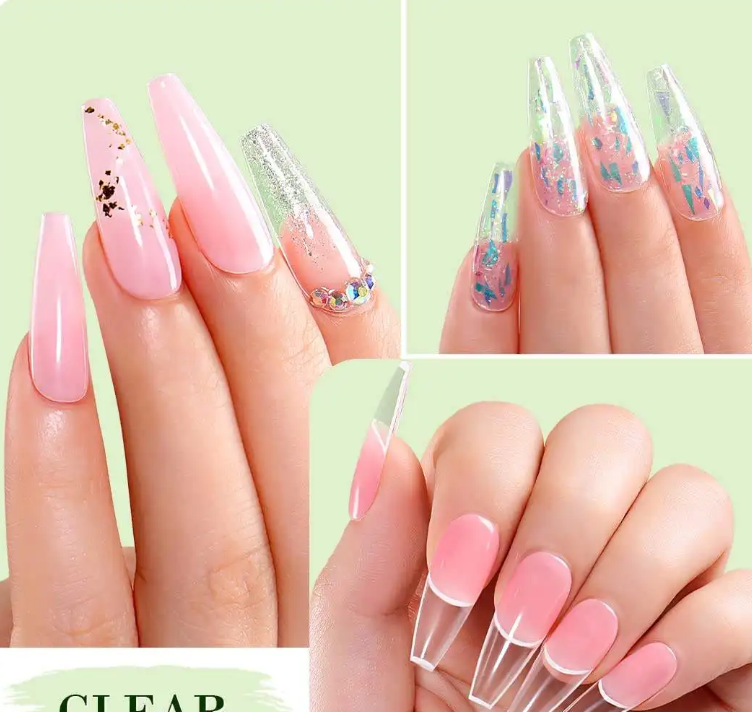
Key Performance Criteria for Professional-Grade Builder Gel
Viscosity, Flexibility, and Clarity: How They Impact Application and Wear
Viscosity dictates how a builder gel behaves on the nail plate. Low-viscosity formulas self-level quickly—ideal for thin overlays and minimizing filing. Medium-viscosity gels strike a balance: enough body to build a subtle apex without migrating into sidewalls. High-viscosity (“hard”) gels hold their shape during sculpting, making them essential for long extensions or correcting irregular nail contours.
Flexibility—measured by elastic modulus—determines how well the gel moves with the natural nail under stress. Too rigid, and it risks cracking or lifting at the free edge; too flexible, and it may wear prematurely. Top manufacturers fine-tune oligomer and monomer ratios to create a polymer network that absorbs impact without failure.
Optical clarity signals formulation homogeneity. A crystal-clear gel reflects a stable, impurity-free blend—critical for preventing yellowing, micro-bubbles, or cloudiness over time. This clarity is especially vital for French manicures or negative-space designs, where authenticity and polish directly influence client perception, retention, and service pricing.
Cure Time, HEMA Content, and Soak-Off Compatibility: Balancing Efficiency and Nail Health
Cure time affects both salon throughput and nail integrity. High-performance builder gels cure fully in 30–60 seconds under a quality LED lamp—shaving minutes off each service—while maintaining >90% monomer conversion. However, excessively rapid polymerization can generate heat spikes that compromise adhesion and cause client discomfort.
HEMA (2-hydroxyethyl methacrylate) enhances adhesion and flexibility but is a known sensitizer. Leading brands now offer low-HEMA or HEMA-free alternatives using larger, less-penetrating methacrylate monomers—reducing allergy risk without sacrificing durability.
Soak-off compatibility defines removal protocol and nail health impact. Traditional hard gels require mechanical filing, which risks thinning the natural nail over repeated services. Soak-off builder gels are engineered with controlled cross-link density: resistant to acetone initially, yet fully soluble after 15–20 minutes of soaking. This hybrid performance supports clients who rotate services frequently—offering hard-gel strength with gentler, non-abrasive removal.
Builder Gel Types Compared: Monophase, Biphase, Triphase, and BIAB
Structural Composition and Real-World Service Applications
Professional builder gel systems are classified by the number of layers required to complete an enhancement—each reflecting distinct chemistry, technique, and outcome. The table below outlines structural composition and core applications:
| Builder Gel Type | Structural Composition | Real-World Service Applications |
|---|---|---|
| Monophase | Single formula integrating base, builder, and top coat functions | Rapid overlays, infills, and simple extensions—ideal for express services where time efficiency is critical |
| Biphase | Two dedicated products: base/builder gel + separate top coat | Natural nail overlays, tip extensions, and basic shape correction—offers balanced strength and flexibility |
| Triphase | Three distinct layers: base gel (adhesion), builder gel (structure), top coat (gloss and protection) | Complex sculpting, long extensions, and high-stress nail repairs—delivers maximum durability and precision |
| BIAB (Builder in a Bottle) | Soak-off builder gel in a bottle, formulated for flexibility and lightweight reinforcement | Clients with weak, thin, or damaged nails—provides gentle support and natural-looking strength with minimal filing |
Matching Builder Gel Consistency to Client Nail Anatomy and Goals
Selecting the right consistency starts with assessing natural nail anatomy—thickness, curvature, flexibility—and aligning it with the client’s goals. Thin, flexible nails respond best to BIAB or soft biphase gels, which reinforce without overloading the nail bed. Medium-viscosity triphase systems suit normal nail plates requiring significant length or refined arches. While high-viscosity monophase gels deliver speed, they lack the nuanced control needed for complex corrections.
Lifestyle and sensitivities further refine selection: active clients benefit from the resilience of triphase gels; those with chemical sensitivities require HEMA-low or HEMA-free BIAB formulations. Crucially, the gel’s flexibility must mirror the nail’s natural movement—too rigid invites lifting; too soft fails to maintain shape. By evaluating free edge length, lunula visibility, and overall nail curve, technicians choose a consistency that ensures both longevity and comfort.
Top Professional Builder Gel Brands: Performance, Safety, and Practice Fit
Benchmarking Builder Gel for Extensions, Overlays, and Shape Correction
Top-tier builder gels distinguish themselves across three core service types: extensions, overlays, and shape correction. Independent lab testing shows premium formulas deliver at least 20% greater tensile strength in extension stress tests versus mid-tier options—significantly reducing lateral cracking risk. For overlays, clarity and self-leveling are non-negotiable: visible streaks, bubbles, or unevenness undermine professional results. Nail educators consistently prioritize low heat spike and shape-memory retention during correction work—traits linked to advanced oligomer blends that stabilize viscosity across temperature fluctuations, whether building delicate almond shapes or dramatic stilettos.
Aligning Builder Gel Selection with Client Sensitivities, Technician Skill, and Salon Budget
Client safety and operational efficiency go hand-in-hand. Dermatological research confirms approximately 1 in 5 individuals experience irritation from HEMA-containing gels—making low- or HEMA-free formulations essential for inclusive service menus. Technician skill level also matters: fast-cure gels demand precise lamp positioning and confident application timing, while slower-curing options offer more margin for error—ideal for developing professionals.
From a financial standpoint, premium gels with 30% higher yield per pot reduce per-service consumable costs by up to $0.75—offsetting initial price premiums. Ultimately, optimal selection balances formulation safety, technical demand, and economic return—ensuring every application supports both client well-being and sustainable salon growth.
FAQ: Key Performance Criteria and Builder Gel Types
What is viscosity, and why is it important in builder gel? Viscosity affects how the gel behaves and is applied. Low-viscosity gels self-level quickly, medium-viscosity gels help build precise shapes, and high-viscosity gels are ideal for detailed sculpting and long extensions.
How does flexibility impact builder gel performance? The flexibility of builder gel allows it to move with the nails without cracking or lifting. It needs a perfect balance to avoid premature wear or damage.
What are the benefits of low-HEMA or HEMA-free builder gels? Low-HEMA or HEMA-free builder gels reduce allergy risks for clients with sensitivities while maintaining excellent durability and adhesion properties.
Which builder gel consistency works best for weak nails? BIAB or soft biphase gels are ideal for weak or thin nails as they reinforce without overloading the nail plate.
What is the main difference between monophase, biphase, and triphase gels? Monophase combines base, builder, and top coat in one formula, biphase uses two steps with a separate top coat, and triphase uses three distinct layers for maximum precision and durability.


