
 EN
EN
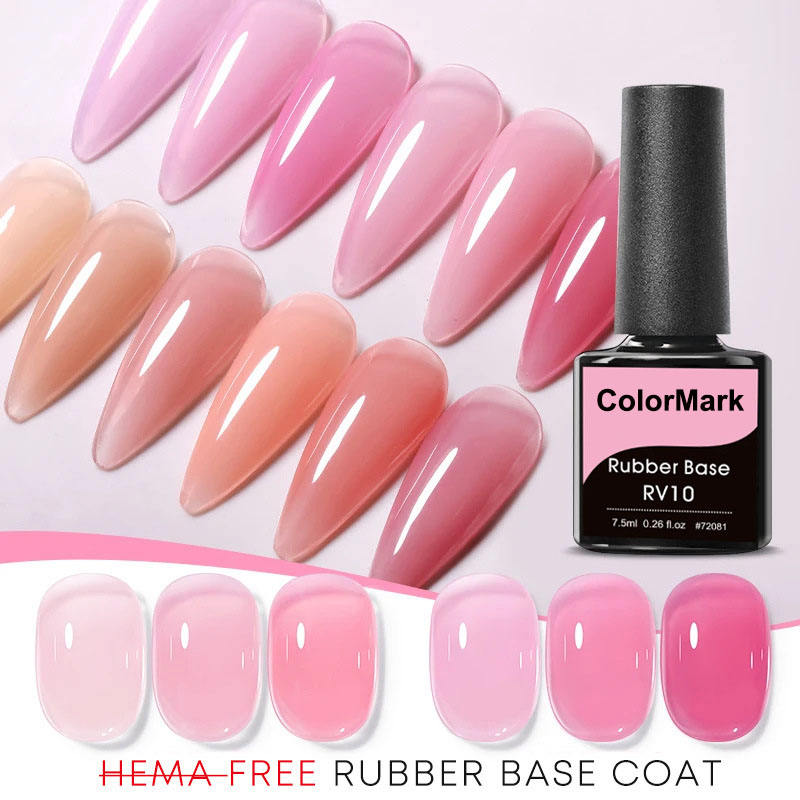
Base coats are the first step to your gel nail process. They create the connection between your natural nails, gel polish, and the rest of the manicure. In the past few years, rubber base gel has started to be used by many professional salons instead of base coats. A good base coat can affect the longevity and aesthetic of the manicure. Instead of only focusing on adhesion, rubber base gel considers the innovation of nail care and the needs of the professional and consumer.
Flexible Bonding and Superior Adhesion
The unique bonding advantages of rubber base gel are its rubber resin formulative and its heat-activated 3D cross-linked structure. This creates a strong, flexible bond to natural nail surfaces. This makes it easier to work with natural nail surfaces and even with bare nails that are fragile and thinner, making them a challenge with basic base coats. Professional nail specialists often complain about and report a habitual experience of basic base coats lifting and peeling at the edges within days while the nail is a prompt to the side of the client, and the client has oily nail beds. In those cases, rubber base gel bond, with no pressure to buff the nail too much, provides the grip that the rubber base gel is designed to provide within the surface nail grooves. A salon with more than five years of experience has mentioned that rubber base gel is the reason behind their less than 60% increasing ratio of manicure touchups. This is clear proof of the advanced adhesion of rubber base gel.
Kind Protection for Your Natural Nails
Rubber base gel offers more health benefits for natural nails than standard base coats. Rubber base gel is held to a higher standard (EU REACH and U.S. FDA) for safety in nail products because it is made with safe non-penetrative ingredients, while traditional products buff nails to create a layer for the coating to adhere to. This process can make nails thinner, more brittle, and more prone to splitting. Rubber base gel also offers a protective coating from daily stresses on the nail, like typing on a keyboard, and from gel removers with their gentle resin coatings. Nail dermatologists said less nail damage/discoloration is seen in clients using rubber base gel on a consistent basis and this is a big plus for those who love to get their nails done.
Simpler Application and Faster Curing
When it comes to the rubber base gel, practicality is very important to simplify the process of refining the nails. This gel does very well to not shrink or pool at the cuticle, meaning it will not require five or six layers of gel to level out. It also cures very quickly under UV and LED lights. It will also help salons reduce the time of an individual job by 10 to 15 minutes. Because the Rubber Base Gel is more forgiving, even those who are new to nail art will not find it overly complicated. The work that goes into this base gel is very impressive because it is easy to use, and does not mark brush.
Wear & Performance Resistance
No base coat demonstrates longevity better than rubber base gel. Traditional base coats hold a manicure for 10 to 15 days, while rubber base gel, when combined with a quality top coat, can hold a manicure for 30 to 45 days. This is a result of the rubber base gel's elastomer, which out performs traditional base coat finishes. Stood up scratches from daily household chores. Rubber base gel does not chip or peel like traditional bases, as rubber base gel bends with the nail and the gel system remains intact. For salons, long lasting performance is a key selling point as customers are happy to pay more for a manicure that doesn't require frequent touch ups.
Cost Efficiency for Professional Nail Businesses
In addition to the technical and care benefits of rubber base gel, there is significant cost efficiency for nail salons and beauty brands. Its ability to be used in a single coat results in decreased product waste. Less gel is used for a manicure with rubber base gel than how many layers would be used with standard base coats. Additionally, the long wear time of the rubber base gel allows for customer loyalty and repeat business. Clients are coming in for new sets of nails as opposed to quick fixes, increasing the rec occurring revenue for the salon. Versatility also allows rubber base gel to be used for private label and small batch customization, which is a growing demand for nail product brands. Rubber base gel brands also report increased wholesale orders because salons are looking for time-saving, customer satisfaction, and multi-functional products.
Rubber base gel is not simply an improved base coat; it is an innovative approach to gel nail care integrating adhesion, protection, practicality, and durability. It solves the professional nail technicians pain points relating to touch-up inefficiencies and high touch-up rates, and for consumers, nails that get damaged due to short-lived manicures. Given the nail care industry's focus on quality and safety, rubber base gel will most likely be the go-to base gel for consumers, leaving standard base gels behind in functionality and value.